
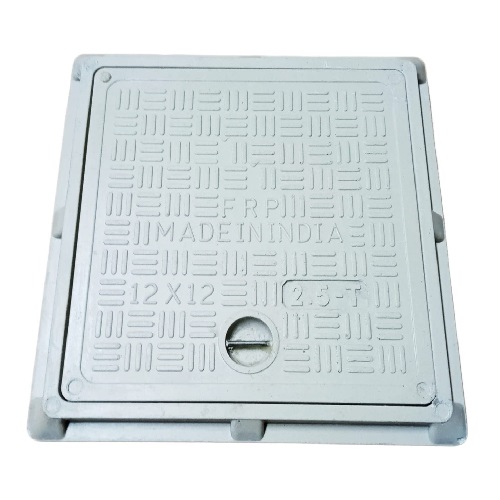
An FRP manhole cover is a manhole cover made from Fiber Reinforced Polymer (FRP). FRP is a composite material consisting of a polymer matrix reinforced with fibers, often glass, carbon, or aramid fibers. This construction creates a strong, lightweight, and durable cover suitable for various applications.
Here's a more detailed explanation:
-
Key Properties:
FRP manhole covers are known for their:- High Strength-to-Weight Ratio: They are much lighter than traditional materials like cast iron or concrete, while still being able to withstand heavy loads.
- Corrosion Resistance: FRP is resistant to rust and corrosion, making it ideal for harsh environments.
- Durability: They can withstand heavy traffic and extreme temperatures.
- Non-conductive: FRP is an insulator, making it a safer option around electrical utilities.
-
Applications:
FRP manhole covers are used in various settings, including:- Residential areas, sidewalks, and driveways.
- Light commercial areas.
- Underground parking and parking decks.
- Sewer passages with electrical utilities.
-
Manufacturing:
FRP manhole covers are typically manufactured using compression molding techniques, which involves layering the composite materials and then curing them under heat and pressure.
-
Material Composition:
FRP combines the properties of the polymer matrix and the reinforcing fibers. The polymer matrix binds the fibers together and distributes the load, while the fibers provide strength and stiffness.
FRP Manhole Covers
An FRP manhole cover is a manhole cover made from Fiber Reinforced Polymer (FRP). FRP is a composite material consisting of a polymer matrix reinforced with fibers, often glass, carbon, or aramid fibers. This construction creates a strong, lightweight, and durable cover suitable for various applications.
Here's a more detailed explanation:
-
Key Properties:
FRP manhole covers are known for their:- High Strength-to-Weight Ratio: They are much lighter than traditional materials like cast iron or concrete, while still being able to withstand heavy loads.
- Corrosion Resistance: FRP is resistant to rust and corrosion, making it ideal for harsh environments.
- Durability: They can withstand heavy traffic and extreme temperatures.
- Non-conductive: FRP is an insulator, making it a safer option around electrical utilities.
-
Applications:
FRP manhole covers are used in various settings, including:- Residential areas, sidewalks, and driveways.
- Light commercial areas.
- Underground parking and parking decks.
- Sewer passages with electrical utilities.
-
Manufacturing:
FRP manhole covers are typically manufactured using compression molding techniques, which involves layering the composite materials and then curing them under heat and pressure.
-
Material Composition:
FRP combines the properties of the polymer matrix and the reinforcing fibers. The polymer matrix binds the fibers together and distributes the load, while the fibers provide strength and stiffness.